Cost Segregation in Jacksonville, FL: $20K-$60K Year 1
Jacksonville rental and STR investors save $20K-$60K in Year 1 with cost segregation + 100% bonus depreciation. See real savings by property type.
Jacksonville is Florida’s largest city by area (875 sq mi), with a $300K median rental basis and zero state income tax. A $475K duplex in Riverside or San Marco typically accelerates ~$109K in Year 1 depreciation — about $35K in tax savings at the 32% bracket. Beach-adjacent STRs and properties near NAS Jacksonville (40K+ military personnel) round out the investor market.
Jacksonville Is Florida’s Largest City by Area. Most Investors Here Have Never Heard of Cost Segregation.
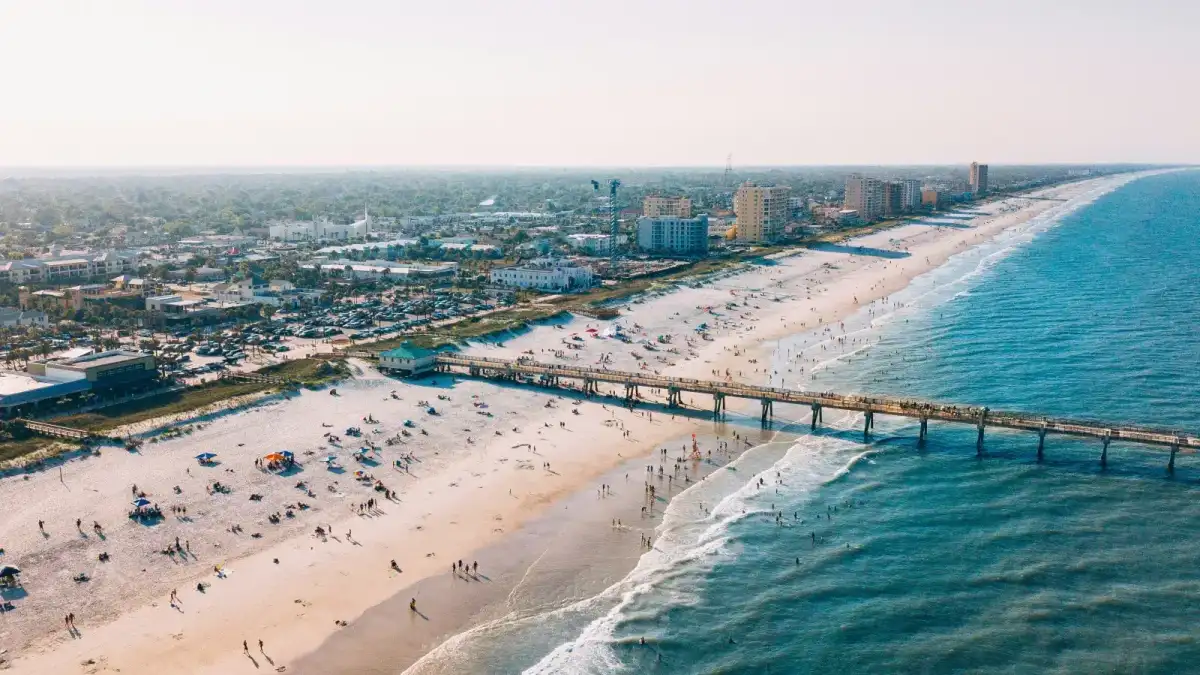
Jacksonville sprawls across 875 square miles of Duval County—the largest city by land area in the contiguous United States. That geographic footprint means dozens of distinct investment neighborhoods, from the beaches communities of Atlantic Beach, Neptune Beach, and Jacksonville Beach to the rapidly developing Westside and Southside corridors. The median home price in the Jacksonville metro sits around $340,000 as of early 2026, though beach-area properties regularly push $500K-$800K and established neighborhoods like Riverside, San Marco, and Avondale command premiums.
What most Jacksonville investors don’t realize is that the IRS allows you to reclassify components of your rental property into shorter depreciation categories through a process called cost segregation. Instead of depreciating your entire building over 27.5 years, an engineering-based study identifies the portions that qualify as 5-year, 7-year, and 15-year property. With 100% bonus depreciation restored permanently under the One Big Beautiful Bill Act, those reclassified amounts can be deducted in full in Year 1.
Jacksonville Real Estate Market Snapshot Median Home Price
$350,000 Median Rental Property
$300,000 Avg STR Annual Revenue
$35,000 Property Tax Rate
0.91% State Income Tax
None Construction Cost Index
Below Average
Affordable Florida market with beach access. Top investment areas: Riverside, San Marco, Beaches, Springfield.
Source: Public assessor data, Zillow, AirDNA estimates. Values are approximate metro-area medians.
Florida’s Tax Advantage Is More Than Just “No State Income Tax”
Florida investors already benefit from zero state income tax. But the cost segregation angle adds a layer that many overlook. When you accelerate federal depreciation deductions, you’re reducing your federal taxable income—and since Florida doesn’t add a state income tax layer on top, there’s no state-level depreciation recapture to worry about when you eventually sell.
For an out-of-state investor who owns Jacksonville rental property but lives in a high-tax state like New York, California, or New Jersey, the property itself generates income that’s only federally taxed. Cost segregation reduces that federal burden. It’s one of the cleanest tax structures in the country for rental property depreciation.
Jacksonville’s combination of affordable entry prices, strong population growth (Duval County added 15,000+ residents in 2024), and Florida’s zero state income tax creates one of the most favorable cost segregation environments in the Southeast.
A Real Example: Duplex in Riverside
The property: A side-by-side duplex in the Riverside neighborhood (32204), purchased in August 2023 for $475,000. Built in 1955, fully renovated in 2021 with new kitchens, bathrooms, flooring, and HVAC. Each unit rents for $1,650/month. The owner is a Navy officer stationed at NAS Jacksonville with additional 1099 consulting income totaling $140,000.
Without cost segregation: Depreciable basis (after land at 15% for Duval County) is approximately $404,000. Straight-line depreciation: $14,690 per year.
With cost segregation:
| Category | Amount | Year 1 Deduction |
|---|---|---|
| 5-Year Property (cabinetry, appliances, flooring, fixtures, bathroom accessories) | $80,800 | $80,800 (100% bonus) |
| 15-Year Property (driveway, sidewalks, landscaping, fencing, parking pad) | $28,300 | $28,300 (100% bonus) |
| 27.5-Year Property (remaining building structure) | $294,900 | $10,720 (straight-line) |
| Total Year 1 Accelerated Deductions | $109,100 |
At a 32% federal rate, that $109,100 in Year 1 deductions translates to approximately $34,900 in estimated tax savings. The renovated duplex is a particularly strong candidate because the renovation costs themselves—new cabinets, countertops, flooring, fixtures, appliances—are heavily weighted toward 5-year property.
Jacksonville Neighborhoods and Investment Profiles
Riverside / Avondale / San Marco (32204, 32205, 32207): Jacksonville’s most desirable urban neighborhoods. Older homes, many built 1920-1960, with substantial renovation investment. These properties generate some of the highest reclassification percentages because pre-1960 construction has more fixture and system components relative to structure. Renovated properties in these areas are ideal cost seg candidates. Median purchase prices: $350K-$550K.
Jacksonville Beach / Neptune Beach / Atlantic Beach (32250, 32266, 32233): Beach-area properties commanding $500K-$900K. Many operate as STRs during peak season. The outdoor improvements—decks, patios, outdoor showers, dune walkovers, landscaping—qualify as 15-year property. Furnished beach rentals see the highest reclassification percentages in the Jacksonville market.
Mandarin / Ponte Vedra (32223, 32081, 32082): Suburban family neighborhoods with newer construction. Purchase prices in the $400K-$600K range. Pool homes are common here, and the pool, pool equipment, and surrounding hardscape are all reclassifiable to 15-year property.
Westside / Argyle Forest (32244, 32246): More affordable entry point, median around $275K-$350K. Strong rental demand from NAS Jacksonville and Cecil Spaceport-area employment growth. Even at these price points, the cost seg math works. A $300K property can generate $45K-$65K in Year 1 accelerated deductions.
Southside / Town Center (32256, 32246): Rapid commercial and residential development around the St. Johns Town Center corridor. Newer apartments and condos. Investors buying condos or small multifamily here benefit from the combination of newer finishes and growing rental demand.
The Naval Station Factor
NAS Jacksonville, Naval Station Mayport, and the Blount Island Command together employ over 40,000 military and civilian personnel. This creates steady rental demand in surrounding neighborhoods—the kind of demand that doesn’t fluctuate with tech layoffs or tourism trends. Military families on PCS orders need housing, often for 2-3 year tours, and BAH rates in the Jacksonville area support rents in the $1,500-$2,200 range for typical 3-4 bedroom homes.
For investors who own multiple properties near military installations, the cumulative tax impact of running cost segregation studies on each property can be significant. A three-property portfolio with a combined basis of $900K could generate $180K+ in accelerated Year 1 deductions.
100% Bonus Depreciation and Lookback Studies
The One Big Beautiful Bill Act permanently restored 100% bonus depreciation for 2025 and beyond. If you purchased your Jacksonville property in prior years and have been using straight-line depreciation, a lookback study lets you capture all the missed accelerated depreciation in a single year. Your CPA files Form 3115, and the cumulative catch-up flows into your current return.
Jacksonville Real Estate Market: Why Cost Segregation Makes Sense Here
Jacksonville is the largest city by land area in the contiguous U.S., and that sprawl translates into a remarkably diverse rental market. Median home prices hover around $350K, well below the national average for a metro of 1.6 million people. Investors can enter the market at $250K in neighborhoods like Arlington or the Westside and still find strong rental demand driven by NAS Jacksonville, the Mayo Clinic campus, and the growing logistics corridor around the port.
Florida has no state income tax, which means every dollar of federal depreciation you accelerate through cost segregation hits your bottom line at the full federal rate. There is no state clawback, no conformity issue, and no separate depreciation schedule to maintain. For investors in the 37% bracket, a cost seg study on a $350K Jacksonville rental can produce $18K-$25K in Year 1 federal tax savings on a study that costs $795.
Estimated Year 1 Savings for Jacksonville Properties
| Property Type | Price | Est. Year 1 Tax Savings |
|---|---|---|
| Jacksonville SFR | $350K | $16K-$23K |
| Jacksonville Beach STR | $650K | $38K-$54K |
| Jacksonville Duplex | $425K | $20K-$28K |
| Jacksonville Condo | $275K | $11K-$16K |
Estimates assume 100% bonus depreciation at the 37% federal bracket. Actual savings depend on property condition, age, and furnishing level.
Who Orders Cost Segregation in Jacksonville?
Most of our Jacksonville orders come from military-area landlords who own one to five single-family rentals near NAS Jacksonville or Mayport. We also see steady demand from out-of-state investors who bought Jacksonville Beach vacation rentals and W-2 earners at the Mayo Clinic or financial services firms downtown who picked up investment properties during the 2020-2022 price run.
Airbnb cost segregation guide →
Whether you own a $275K rental near Cecil Spaceport or a $750K beach house on Atlantic Boulevard, a cost segregation study pays for itself many times over in Year 1 tax savings.
Also Serving Nearby Markets
We serve investors across Florida including Tampa, Orlando, Miami, and state-by-state tax rules →
Related Reading
- What Your CPA Needs to Know About Your Cost Segregation Study
- First-Year Depreciation: What New Property Owners Need to Know
- Sedona’s STR Permit Cap Made Your Property More Valuable—and More Depreciable
Jacksonville Investors: See Your Property’s Depreciation Breakdown
Run the calculator on your specific property.
Getting Started
Provide your property address, purchase price, type, year built, and any significant improvements. We deliver a CPA-ready report with component-level depreciation schedules and IRS-compliant MACRS classifications. Your tax professional applies it directly to your return. The entire process takes less time than driving across Jacksonville—which, given the city’s size, is saying something.
Run the calculator on your specific property.